Showing posts with label professional development. Show all posts

Saturday, July 23, 2016

Monthly Planning Strategy

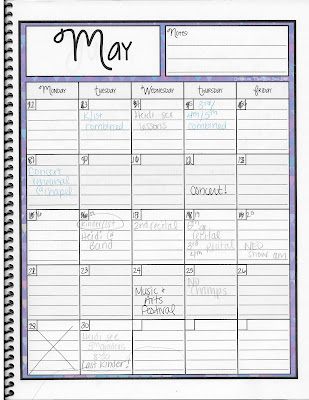
I have tried so many different planning strategies over the years!  My naive 1st-year teacher self thought I would do all my plans on Thursdays for the following week and enjoy my weekends.  Then the school year slapped me in the face and I was playing catch up all the time on Sunday evenings trying to figure out what in the world I'm going to do 10 hours from now with 20 little kindergarteners.

Then my niave 2nd-year teacher self thought I could just reuse all of last year's plans and not have to do most of the work again.  WRONG!

By my 3rd year, I knew something had to change.  I spent a very long time reading through pages and pages and pages of previous plans to make a document that contained ideas (not plans) of what activities I did during each month.  This document allowed for a big picture view of where classes are now and where they are heading but also allowed for lots of flexibility and changes.


I put categories to help me organize the information and with just one set of pages open, I can see my potential activities for the whole school.

Let me be clear: THESE ARE NOT MY LESSON PLANS!  This document simply helps me see what I've done in years past and the progression of activities. As the year goes on, I find new resources and adapt to my students so I adjust my planner too.  I pencil in new things (or cross out others) and update my document for the next year!


Monthly Plans


As you can see, my monthly planner is bound (a couple bucks at Staples)  and at the front, I also have calendar pages.  My friend Sara from Music with Sara Bibee has a great set of Calendar and planning pages and I love the simple yet colorful designs!  You can check them out on her TPT Store!
Montly Plans

Planning is still (and will always be) a tedious event, but being able to see options for my whole school at the same time has really helped me stay focused and keep consistency!  You can check out my editable Monthly Planner Template (with and without categories) on my TPT Store!


Monthly Plans


Sunday, February 15, 2015

Five Favorite Pins of February Linky Party!

Many thanks to Aileen from Mrs. Miracle's Music Room for hosting a Linky Party!

I LOVE Pinterest!  If only I could get credit toward my Professional Development hours for all the time I've spent learning from fantastic teachers!  Here are my (current) Five Favorite Pins!


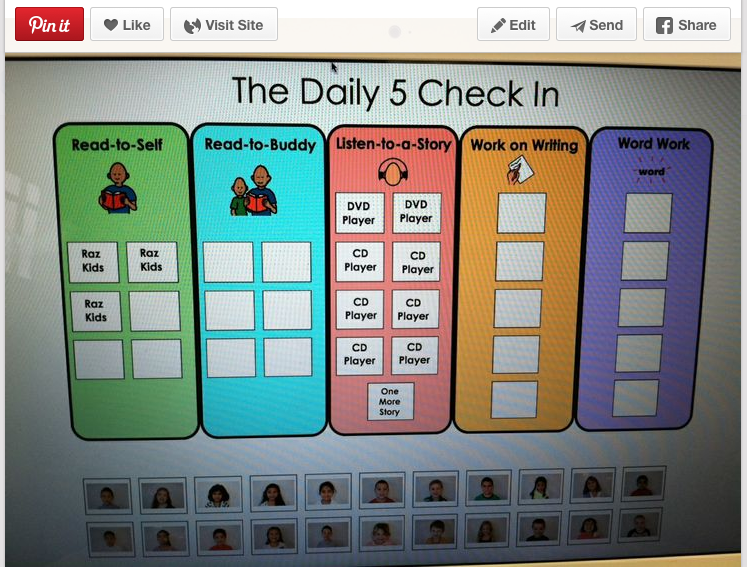
#1 Daily 5 Check In
My school has been focusing on Math and Writing workshops lately which mean students are getting accustomed to working in small groups without a teacher.  I started looking into Learning Contracts as part of my Differentiation Instruction goal and love the possibilities for Recorder and iPad projects.  This has become a great tool for me to know what students are working on and how many students are allowed to do each activity at a time.  I can also preassign students as necessary!

https://www.pinterest.com/pin/381820874632786591/


#2 Cherie Herring's 18 Music Activities for Small Children (SMARTBoard)
Anytime I need a sub, I pull up Cherie Herring's SMARTBoard files. They are great for non-musical subs but are extremely musically engaging for the students.  Each page is interactive and she has tons of little sound file surprises that the kids just love!
https://www.pinterest.com/pin/381820874632786555/


#3 Make Your Own Tubanos
I haven't tried this yet but I really really want to!  Just gotta figure out where to get those tubes!
https://www.pinterest.com/pin/381820874632552437/


#4 Catch a Falling Star
So beautiful! This is my dream for my students.  They are more than capable musicians, I just have to become a better teacher!
https://www.pinterest.com/pin/381820874632552314/

#5  Lapbook Templates/Glue Sponges
I couldn't pick just one more-but these two go together!  I love lapbooks!  Lots of information but all contained together.  I made a lapbook for my recorder kids to take home so they always have the information they need.  And Glue Sponges!  OMG!  Best idea in the entire interactive notebook/lapbook world.  If you ever use glue in your classroom, you MUST try this! (really, 1353 pins on this glue sponge post!!)

https://www.pinterest.com/pin/515451119825476274/https://www.pinterest.com/pin/381820874632220079/


Don't forget to check out other posts as part of Mrs.  Miracle's Linky Party!  

Saturday, February 14, 2015

Whole Brain Teaching in the Music Classroom-Teach! Ok!

So far we've looked at two main principals of Whole Brain Teaching: Class? Yes! and Mirror!  


The basic premise is that interaction with students should be direct, to the point, and interactive.  (Don't forget fun!  It's fun because students get to DO something; they aren't asked to simply sit still and listen)

Most of the next few implementations of Whole Brain Teaching are extensions of Class? Yes! and Mirror.  


Teach! Ok! takes the students out of speaking in unison to repeat the teacher and now gives them a chance to speak and motion in their own setting.  After mirroring a new concept 4 or 5 times, students are then asked to teach each other!

This is not new; teachers have been saying for years to "turn to a partner and tell them something you learned" or some other variation of the same.  Two differences: whole brain teaching is a more direct command and also puts the right words into each students mouths and hands.

While there is definitely merit in students synthesizing and extrapolating to their own words, that can come after mastering the basics and with a differentiation purpose. 

I already have my kids divided into 1s and 2s for partner games, concentric circles, etc.  Especially for my big chatty classes, I have loved being able to say "1s take a step into the blue circle and face your partner."  I even go so far as boy/girl partners in my toughest class.  So now I say "Teach!" Students respond with "Ok!" and they turn to their partners immediately.  I've seen some teachers say "1s teach 2s" and then there is a "Switch!" instruction where the 2s teach the 1s.  A quick reminder here or there never hurts that a group of 3 is always ok if someone is absent.

I am all about experiencing music and moving to feel the beat and exploring musical concepts but eventually the concepts need to be put into words.  That's what I use these strategies for.  We glide half notes, we've sung half notes, we've felt two heartbeats during half notes, we've explored which instruments can sound for a half note, and now we need to put into words that a half note gets two beats. So when showing my students what a half note looks like, we MIRROR half notes with our hands and proclaim "a half note gets two beats."  Imitation is important anytime something is new.  They imitate me 4, 5, 6 times then I can say TEACH! and they say OK!  then turn to their partner and teach that a half note gets two beats.  Now students are saying it at different times and hearing/seeing it from peers.  It's also a great time for me to scan the room and check that students are able to say and perform on their own.  Most of them can after all the imitation, but there are always a few that need some guidance and that's my time to step it!  (Did we talk about differentiation yet??  Seeing the needs and meeting them)

Implementing any new strategy into your teaching can be tricky for you the teacher, but also the students.  I started small with only Class Yes, then added Mirror, now Teach Ok!.  I had them teaching each other after mirror before I used the command Teach and the response Ok.  It was a small step then to introduce the call and response approach.

Did you notice WBT is all about call and response??  Much more conversational style of directions than commands.  It helps students stay focused and gives them an outlet to talk!

I love to use Teach Ok! at the end of teaching a new concept or at the beginning of a class to review or when lining up to leave as an exit activity.  It gives my students a chance to talk and I like it!


 Don't miss a post!  Follow me on Facebook or subscribe to my blog via email!

Saturday, February 7, 2015

Whole Brain Teaching in the Music Classroom-Mirror

I think anyone who has had any prolonged contact with children can say that a child's attention span is quite short.  The movie UP! did such a great job of characterizing this in the dog Doug who *SQUIRREL* would get distracted from whatever he was *SQUIRREL* anytime he thought about, heard the word, saw some*SQUIRREL*thing.. You get the picture!  Students, in my classroom at least, are very much like the dog, Doug, and get distracted by other students, things out the window, thoughts in their head, or even just the dirt on the floor.  

Whole Brain Teaching is not a behavior plan, it's a teaching plan.  The best part about it, though, is that the teaching plan is so appropriate for short attention spans that it addresses many behavioral issues at the same time!  Like I said in the intro a few posts ago, I started looking into WBT as a quest to help a 1st grade class with behavioral issues.  They were constantly chatting off topic, calling out to me and each other, and it felt like their attention was never on the musiking that I was trying to lead.  (If you're unfamiliar with the term musiking, then you did not have Dr. Reynolds at Temple University...she made us put it into our  Microsoft WORD dictionary at the start of class because any paper we wrote about better include how we would lead the musiking in our classes.)

The teaching plan of mirror addresses my key concepts and the short attention span of young learners.  (Old learners too!  Let's face it, attention span does not automatically grow as we grow older!)  Behavioral plans address the behavior primarily.  I use a keyboard clip up to entice my students to behavior correctly and earn a fun music day.  We have "How to Apologize" posters to teach students what goes into a heart-felt apology.  There are rules and consequences and parent interaction emails all to help students behavior appropriately in the classroom.  All of these things are great and necessary, but they are all only behavioral focused-nothing to do with the concepts I am trying to teach to fulfill my music curriculum.


Anytime I'm teaching a new concept or reviewing old ones, or simply talking about a concept, I use the same language and show gestures.  Mirror! And students mirror the same language and gestures back to me.  So simple!  That trigger word *MIRROR* works just like *SQUIRREL* and anyone who might have been chatting to the neighbor realizes something is about to happen and snaps back to me.


I think this is super easy to implement in the music classroom because we are such an imitative classroom.  My students know "echo after me" or "my turn, your turn" and so transitioning to "mirror" was seamless (though sometimes out of habit, I use the word echo instead of mirror.)  If we do imitation with pitch and rhythm and lyrics, why not continue imitation when we get to the decode and verbal association of concepts.  
So when reminding my 3rd grade recorder students that a half note gets two beats, this was what was heard in the room:

Teacher: Class class class!
Students: Yes Yes Yes!
Teacher: A half note gets two beats. 
(gesture: make a half note with both hands, one hand open circle, the other hand stem.  Pulse the half note twice then show two fingers pulsed and moving to show two beats)
Teacher: Mirror!
(gesture: two hands up, palms out)
Students: Mirror!
(gesture: two hands up, palms out)
Teacher: A half note (with gesture)
Students: A half note (with gesture)
Teacher: gets two beats (with gesture)
Students: gets two beats (with gesture)
Teacher: A half note gets two beats (with gesture)
Students: A half note gets two beats (with gesture)

We would then repeat a few more times, they'd teach each other, they'd use just gestures, etc.  Music teachers are always great at varying an activity to keep it fun and different!  When students line up to leave, we can mirror with gestures only, to review the concept and focus their attention from the craziness of moving from sitting spots to line up dots back to facing forward ready to leave and be musiking on the way out the door.  

Here's a video at then end of a string family lesson in 1st grade.  Students learned that the "Viola is the medium in the string family" and had just taught a partner using gestures.  You'll also see our "class yes" when transitioning to a new activity and a "one second party" because we all did a good job with the transition.  Of course I fell back into old habits using "echo" instead of "mirror" but you get the picture!

 
The key is repetition, but as music teachers, we know that.  And we already know that hand motions are great for pitch recognition and learning lyrics, so let's keep extending what we know works into the areas of our teaching that are the hardest for students to handle-sitting still and keeping quiet.  

Don't miss a post!  Follow me on Facebook or subscribe to my blog via email!

Sunday, February 1, 2015

Whole Brain Teaching in the Music Classroom-Class? Yes!


There are so many "attention getters" that teachers use to quickly grab the attention of their students.  I've heard echo clapping and call/response sayings in every silly or sweet or cliche variation.  A simple pinterest search left my brain spinning with all the possibilities.  Each saying takes a little bit of procedure practice and prep for the teacher to remember them all.  I can only imagine what students go through when every classroom they enter has a different set of attention getters and all the many responses they are expected to have at the tip of their tongue.

Whole Brain Teaching is no different with it's call and response attention getter except for one thing:  it's direct and to the point.  The teacher asks for the classes attention and the students give it.  Not asking for pepperoni and the students give pizza, or asking for peanut butter and getting jelly, or asking for hocus pocus and getting focus.  Class?  Yes!

Sounds too simple, but it's not.  Sounds too boring, but it's not.  While being direct and to the point, class/yes still gives lots of opportunity for silly, sweet, and cliche.  Variations are one of the main reasons why class/yes is successful with the students.  Class Class? Yes Yes! Ok Class?  Ok Yes!  Classity Class?  Yessity Yes!  Our kindergarten teacher got creative one time and jumped when she said Class?  Her kids didn't even flinch, they simply jumped while responding Yes!  So simple for the teacher and students to remember, so easy to embellish.

There is nothing specific about class/yes for any classroom, but with the requirement to vary my approach as often as possible, my variations have become very musical!  I vary pitch and rhythm and expect my students to echo the same way.

Cla-ass (sol-mi) with and without hand signals
Class class class class (sol la sol mi)
Cla-ass (vocal slide up/down)
Class class (high voice/low voice)
Class class class (du-de du)
Class, class class (du rest de du)
Classity Class (du-da-de du)
Class Class (du-u du-u)

Really the possibilities are endless.  And easy to make up on the spot for whatever concept each class is currently working on.  Second grade was doing half notes just the other day so my brain is thinking half notes.  I need their attention and half notes come out in my Class!  Use whatever is happening in your classroom.  Don't think that class/yes is only verbal-adding movement is what Whole Brain Teaching is all about!


ALL THE TIME!  In one 30 minute class time, I might use it about 8-10 times.  Anytime I need their attention, I ask for it!  If I need to talk to them before then enter my classroom, if I need to give directions after they found their spots, if I'm changing activities and my transition wasn't the greatest, if I start to lose their focus in an activity, when lining up to leave.  


There is nothing particularly unique about using an attention getter in class.  What I love about the WBT approach is that it is direct and to the point, but fun and new every time.  What's great about my experience is that students are hearing class/yes from every teacher in the building.  We have all chosen to implement this basic change in our classrooms and both students and teachers are benefiting.  


Missed the intro?  Check out my inspiration to explore Whole Brain Teaching and some great FREE resources from the WBT website here!

Don't miss a post!  Follow me on Facebook or subscribe to my blog via email.

Saturday, January 31, 2015

Whole Brain Teaching in the Music Classroom


I stumbled upon Whole Brain Teaching on one of my Pinterest filled Saturdays.  I was searching for ways to help my extra chatty impulsive first grade class.  Here's the video I found. 


After seeing this video, I was impressed by 6 things.

The students were DOING something while waiting for everyone to be ready.
 

There were HANDMOTIONS!  I love handmotions!


The students were ECHOING all the time and with purpose.
The students were invited to TALK with one another and they chose to stay on topic.

The length of time that the students were asked to SIT STILL and LISTEN was really short.
 
There was some kind of SCOREBOARD for when the teacher got what she wanted.


I was mesmerized!  I emailed the teacher in this video and spent hours doing YouTube research and googling everything Whole Brain Teaching.  I started talking to other teachers in my building. I was unsure of what Whole Brain Teaching could look like in a music classroom but I was sure that it would be super cool in a regular classroom.

As more teachers in my building started talking and learning about Whole Brain Teaching, we approached the principal about focusing our building professional development reading on the book written by Chris Biffle, Whole Brain Teaching for Challenging Kids (available on Amazon Kindle for FREE!).  Reading the book, I was more and more convinced that this approach to teaching would be fabulous for not only the challenging kids, but for the most well behaved kids as well.  It's not about a behavior plan, its about a teaching plan.

So what about my music classroom?  It works!  Some parts more than others but the more I explore and try new things, the better my students are behaved and the more they learn. 

Enough to wet your appetite?  The Whole Brain Teaching website has tons of information, research, free resources and webinars!  I'll be delving more into how WBT has impacted my music classroom and transformed how my students learn so stay tuned!


Monday, July 7, 2014

Facebook Frenzy

Probably the best professional development I have ever done started about 8 months ago and continues every single day that I sign into Facebook.  Somewhere in the past few years Facebook morphed from a friend-based social site to a catch-all online forum for anyone and everyone to meet.  The absolute best development in music education world-wide has thanks credited to Facebook.

Today as I was at school working (I'm the technology specialist so summer is just as busy), I had my Facebook page open.  Within the course of the 8 hour day, I conversed with 56 music teachers from around the world and over 200 music teachers listened in (possible thousands more).  Ideas get bounced back and forth, new activities are created, teachers are learning, growing and energizing!  I feel honored being a part of it all!

Anytime I have a question, I have over 8,000 teachers ready to offer advice.  If I have a funny moment in my classroom, I have over 8,000 people to share it with ('cause my husband won't appreciate it the same way).  When something goes RIGHT in my classroom and I'm excited to share my success, there are over 8,000 teachers excited to hear and maybe try it themselves!  I don't think even a year ago we had this kind of peer-to-peer networking to grow and develop together.

I don't know whose brilliant idea it was to start Facebook pages for music teachers; maybe Katie Wardrobe or James Frankel and those geniuses at MusicFirst, but I am so thankful that I even know those music technology gurus and can ask them a question at any time!  Praise God for Facebook!